Kitchen cabinet spraying in Teesside
Spraying kitchen cabinets in Teesside costs £600 to £1,200 in 2026 depending on door count: doors removed and degreased, everything keyed and primed, then sprayed in a hard-wearing cabinet paint for a smooth finish with no brush marks.
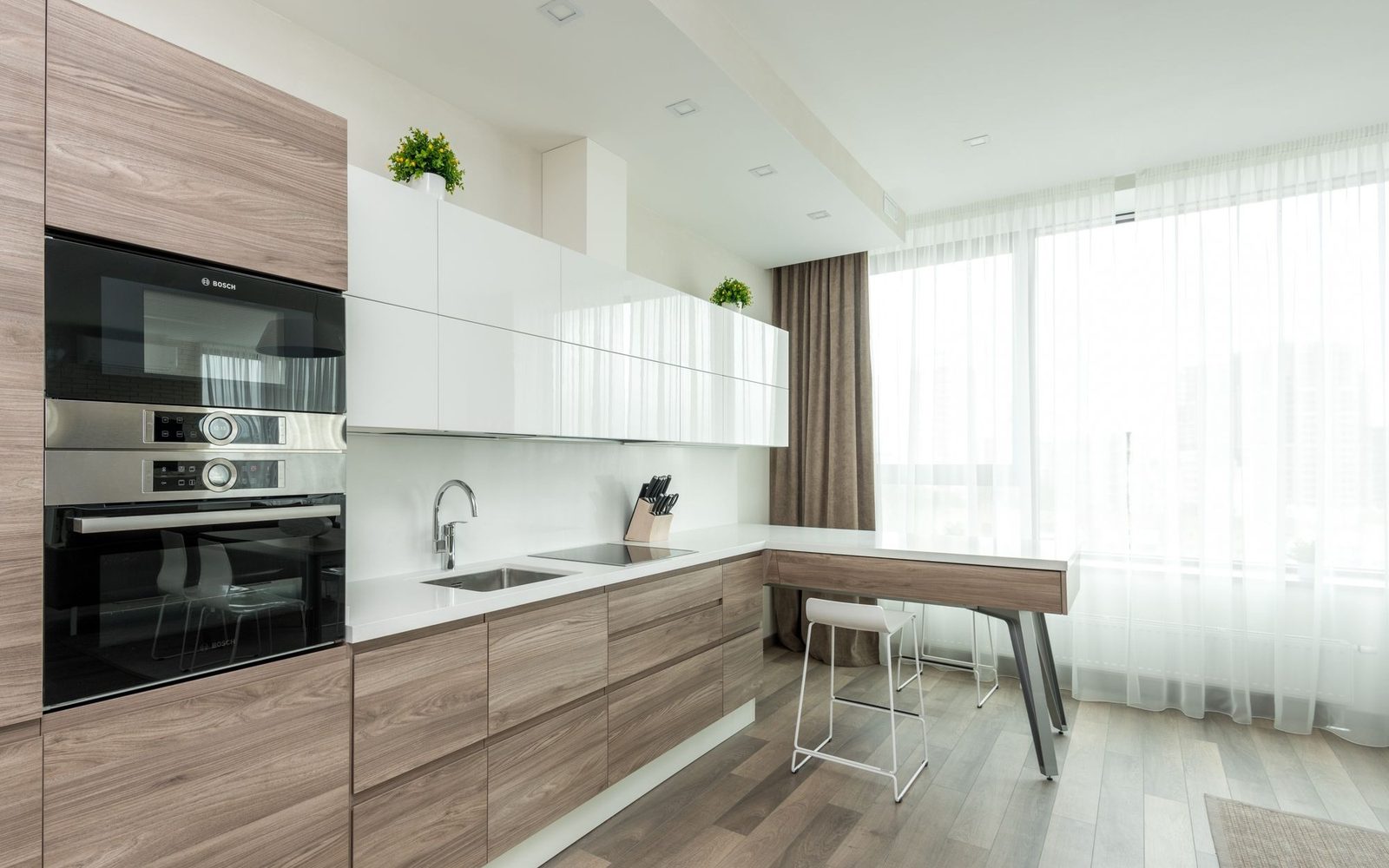
The cheapest way to change a kitchen
Most kitchens fitted across Teesside in the last twenty years have sound carcasses, decent hinges and doors that are simply the wrong colour now. Replacing the lot costs thousands. Spraying the existing doors and frames costs hundreds, takes a few days rather than a few weeks, and leaves the plumbing, worktops and appliances exactly where they are. For oak shaker, cream gloss and dated dark units it is the single highest-impact job in the house.
What the price covers
- Removing and labelling doors and drawer fronts: so every piece goes back exactly where it came from.
- Degreasing: kitchen surfaces carry years of cooking film, and paint will not hold on it. This step is not optional.
- Keying and priming: abrading the existing finish and applying an adhesion primer suited to the substrate, whether that is vinyl-wrapped, melamine faced or solid timber.
- Spraying: two-pack or hard-wearing water-based cabinet coating, sprayed in a masked area or off site, laid on evenly with no brush texture.
- Masking and reassembly: worktops, appliances, floors and walls protected, then doors rehung and aligned at the end.
What moves the price
Door and drawer count is the main number, so a compact galley in a Thornaby semi sits near the bottom of the range while a large island kitchen in Wynyard or Yarm sits at the top. Substrate matters next: solid and painted timber take coatings readily, while vinyl-wrapped and high-gloss doors need more careful preparation and the right primer. Colour choice can add a coat where a strong shade is going over a dark original. And whether the frames are sprayed in situ or the whole set goes away to a spray shop changes both the price and how long your kitchen is out of action.
How long the finish lasts
Prepared and sprayed properly, a cabinet finish behaves like a factory one: washable, resistant to knocks, and good for many years of normal family cooking. It fails in only two circumstances, both preventable. Greasy doors that were never degreased, and cheap emulsion or ordinary wall paint used because it was in the shed. Ask what product is going on and what primer sits under it, because that answer tells you everything about the quote.
The rest of the room
Cabinets change fastest, but the kitchen walls and ceiling usually want doing at the same time, since fresh doors make tired emulsion obvious. Kitchen woodwork, doors and skirtings often go the same way. The interior painting and woodwork and trim pages cover those, and doing them in one visit is cheaper than two separate ones.